
A licensed platform is never one company.
PS Global configures NetSuite for VATPs, stablecoin issuers and custody firms — multi-entity consolidation, sub-ledger reconciliation and regulator-ready reporting on a single audited general ledger.
Every Wallet. One Ledger.
What makes digital asset finance in Hong Kong structurally different.
Running finance for a licensed digital asset business means running a group, because the licence says so. The SFC requires a trading platform to hold client assets through an associated entity, a wholly owned Hong Kong company that does nothing else. Add the treasury company and the offshore holdcos and one exchange becomes a stack. OSL's annual report lists thirteen principal subsidiaries.
Five billion Hong Kong dollarsof client assets.Two companies hold it.

OSL keeps client digital assets on trust — off its own balance sheet, and entirely its responsibility. Hong Kong’s rules put that obligation inside two entities: the SFC-licensed platform, and the custody company it is required to own.
The custody company sits under the licensed platform, not beside it — that direct ownership is what the associated-entity rule requires.
The assets are not on OSL’s balance sheet. The obligation is.
Sources — OSL Group (HKEX: 863) FY2024 results announcement, 24 Mar 2025, Note 10: client digital assets of HK$5,004,094,000 (FY2024) and HK$874,731,000 (FY2023), safekept in segregated client wallets through a trust arrangement with OSL Custody Services Limited and “not recognised as the Group’s digital assets”. Ownership chain per GLEIF records for OSL Custody Services Limited (direct parent: OSL Digital Securities Limited). OSL’s own results release describes assets under custody as a 5.6-fold rise, on a slightly broader measure than the audited note. ETF custody share is OSL’s own figure.
For the controller, that means a statutory audit for every active Hong Kong company, group consolidation under the Companies Ordinance, monthly returns filed with the SFC within three weeks, and client assets held on trust that reconcile daily against on-chain wallets. The sub-ledger sees the chain. The regulator reads the ledger. Between them sits a multi-entity close that spreadsheets and entity-level Xero were never built to carry.

What Makes NetSuite the Right Platform for Digital Asset Finance
Select a Benefit

The platform, the associated entity that holds client assets, the treasury company, and the offshore holdcos are separate companies by regulatory design. NetSuite OneWorld consolidates them in real time, with entity-level books each auditor can sign.
- Consolidated financials across platform, custody, and holding entities
- Entity-level P&L for licence-by-licence economics
- Intercompany service charges eliminated automatically
- Multi-currency close across HKD, USD, and offshore books
The platform, the associated entity that holds client assets, the treasury company, and the offshore holdcos are separate companies by regulatory design. NetSuite OneWorld consolidates them in real time, with entity-level books each auditor can sign.
- Consolidated financials across platform, custody, and holding entities
- Entity-level P&L for licence-by-licence economics
- Intercompany service charges eliminated automatically
- Multi-currency close across HKD, USD, and offshore books

Cryptio, Bitwave, and their peers own the wallet layer, and they should. NetSuite is the general ledger they post into: summarized journals mapped to your chart of accounts, so on-chain volume never floods the books.
- Summary journal entries by wallet, venue, and day
- Transfers between your own wallets never booked as income
- On-exchange, in-transit, and cold storage as separate accounts
- Sub-ledger balances tied out to the general ledger every close

A licensed platform files a monthly return within three weeks of month end and sends every client a statement within seven business days. NetSuite locks closed periods and keeps every figure traceable, so reporting is produced, not reconstructed.
- Monthly SFC returns built from live ledger data
- House and client asset books separated by structure
- Immutable audit trail with period locking
- Statutory audit files for every entity in the group

A stablecoin issuer reports par value daily, publishes reserve disclosures weekly, and files independent attestations that test randomly selected days. That cadence is a systems requirement, and it starts the day the licence takes effect.
- Reserve assets segregated per stablecoin type, held under trust
- Daily par-value statements from live balances
- Weekly reporting to the HKMA and your own website
- Attestation evidence assembled continuously, with reserves in the annual audit

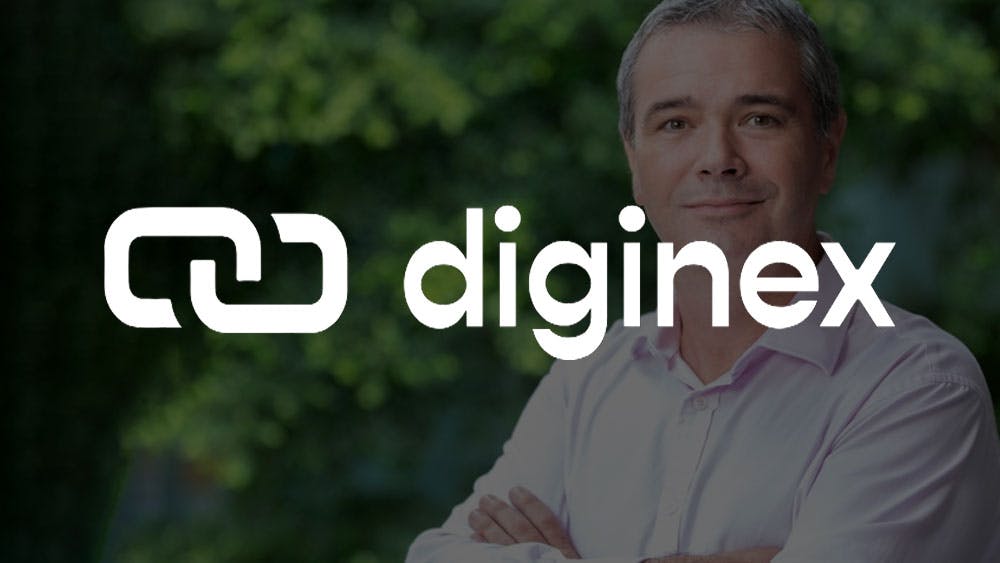
OnePac provided a NetSuite solution that allowed us to grow from a startup to a NASDAQ-listed company
Paul Ewing
Chief Financial Officer
Diginex

OnePac’s experience lends to their capability to help us with any questions we have or any automations that we need.
Jackie Jadrosich
Financial Controller
Diginex
 Click to Play
Digital Asset Track Record
Diginex grew from Hong Kong startup to Nasdaq listing.
Diginex, the Hong Kong digital asset financial services group spanning exchange, custody, and asset management, scaled across a multi-jurisdiction entity structure from Hong Kong to Switzerland. PS Global implemented NetSuite in 2019, and the group closed consolidated books through its October 2020 Nasdaq listing as the first listed company on Nasdaq with a cryptocurrency exchange.
Regional NetSuite Leader
Why Choose PS Global?
As the region’s leading NetSuite provider, we offer the highest number of certified experts and top-rated client satisfaction in implementation and automation.
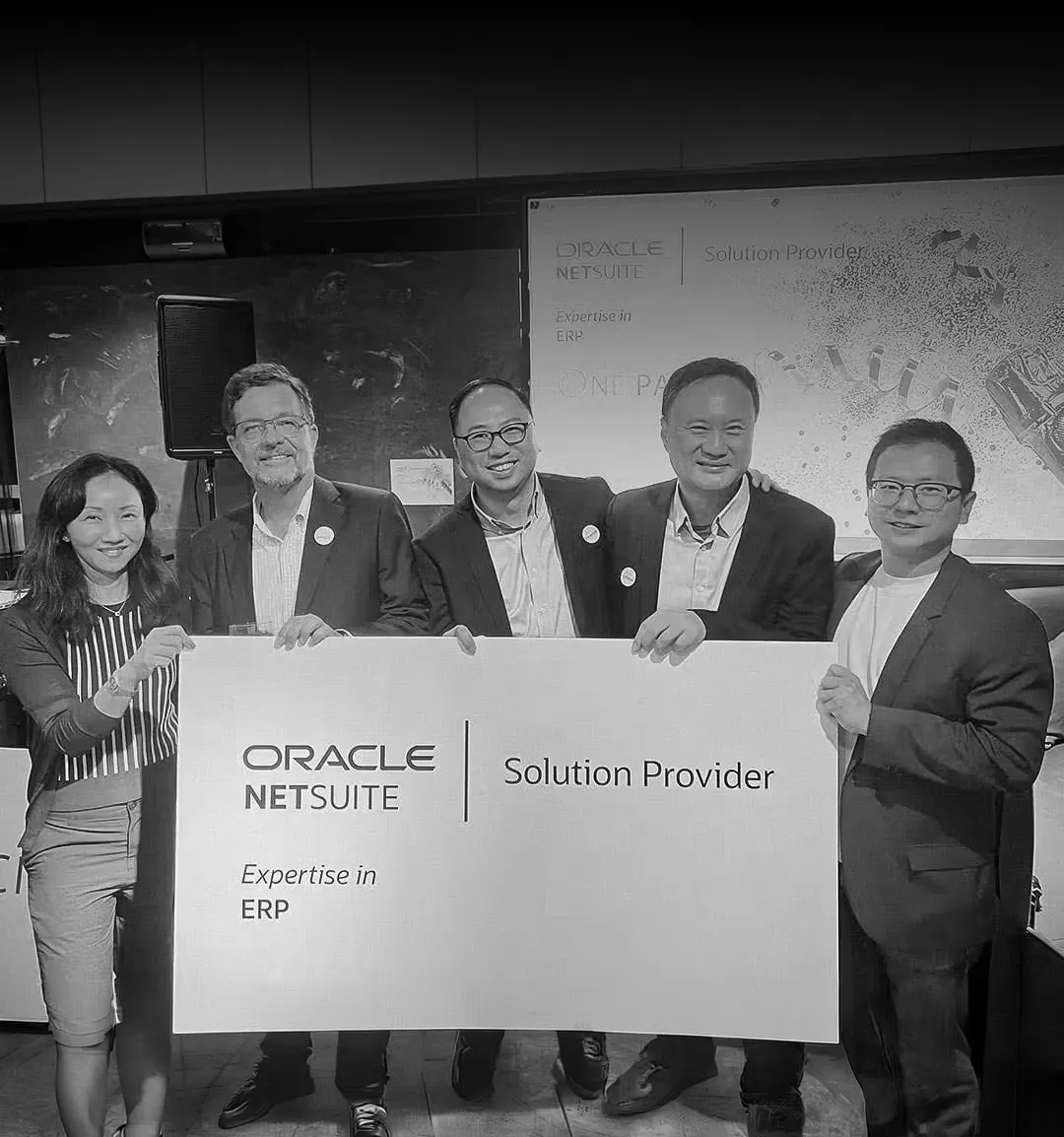
In 2023, PS Global (formerly ONE Pacific) earned the NetSuite Solution Provider – ERP Expertise accreditation, recognizing our excellence in project execution, technical proficiency, and measurable client success with NetSuite Cloud ERP.
PS Global Partner of the Year 2025
ASEAN Solution Provider
Popular Hong Kong Digital Assets Integrations

Stripe
Automatically reconcile Stripe payouts in NetSuite with line-level detail for charges, fees, refunds, and FX so your clearing account actually zeros out.
Xero to NetSuite Migration
Migrate from Xero to NetSuite without losing open invoice history, bank reconciliation context, or your team's sanity during the cutover window.
HSBC
Parse HSBC statement files across your APAC entities, generate country-specific payment files for RTGS, BAHTNET, and direct entry, and handle cash pooling sweeps as inter-company entries in NetSuite.

Bank of China (HK)
BOCHK statement files come in MT940, BAI2, and CSV depending on the account and currency. Getting them all into NetSuite cleanly is the real project.

QuickBooks to NetSuite Migration
Moving from QuickBooks to NetSuite isn't a data export. Chart of accounts translation, AP/AR cutover timing, and historical data scope decisions all need to be right before you flip the switch.

DBS Bank
DBS IDEAL handles payments and statements, but nothing flows into NetSuite automatically. Your finance team is reformatting MT940 files and reconciling multi-currency accounts by hand.
Showing 6 of 8 Hong Kong Digital Assets Integrations

Digital Asset Finance Insights


Digital Assets
FAQ'sHonestly, sometimes yes. One company with one bank account, a wallet, and a small sub-ledger subscription should stay on Xero, and we'll tell you so. Hong Kong still audits that company every year, but a one-entity audit season is survivable.
The calculation flips with structure and licensing, and headcount has little to do with it. A licence that forces a second entity, investors or auditors demanding consolidated statements, client assets arriving under trust, reserves reporting on a daily clock: at that point the cost of the current setup, in controller time and in what the spreadsheets hide, is usually already higher than it looks.
A properly configured NetSuite implementation for a multi-entity digital asset group is a real investment, in licensing and in implementation work, and we won't pretend otherwise. The discovery phase scopes the work and the number before you commit, so there's no open-ended bill.
Weigh it against what the current setup costs: a close that runs multiples of a normal month because reconciliation is manual, the audit premium for records assembled by hand across a group, and regulatory deadlines met by heroics. Licensed businesses don't get to have a bad close month.
Fund-accounting-grade record keeping from day one. The HKMA's guideline requires reserves segregated per stablecoin type and held under trust with a qualified custodian, daily statements of par value and reserve composition, weekly reporting to the HKMA and your own website, independent attestations that test period end plus a randomly selected business day, and an annual audit that covers the reserves.
The register currently holds two licensees, and the HKMA has said the number will remain very limited. That makes operational readiness part of the application story instead of the aftermath. The reserve ledger, the redemption liability at par, and the reporting cadence all need a system behind them before the first coin is issued.
Separately, by structure rather than by memo field. The SFC requires a licensed platform to hold client assets on trust through its associated entity, so house books and client asset books belong to different companies from the start. Whether trust-held client assets appear on the balance sheet at all is a control judgement under HKFRS, and filed Hong Kong accounts show both treatments, entity by entity. Settle it with your auditor early.
Whichever treatment you land on, the ledger has to carry it: client asset accounts walled off from house accounts, daily reconciliation of trust wallets against records, and memorandum accounts where holdings sit off balance sheet. NetSuite holds that structure natively, per entity, with the trail intact.
Keep the sub-ledger. It does what a general ledger never will: ingest chains and custodians, track lot-level cost basis, price positions, and classify DeFi activity. It was never designed as the system of record for a multi-entity group. Statutory accounts, intercompany charges, consolidation, payables, payroll, and the audit file all live in the ledger the sub-ledger posts into.
That pairing is the architecture the market has settled on, and the one the Big Four validate. The practical question is the seam: what posts, how summarized, mapped to which accounts, reconciled how often. That seam is exactly the work we scope in discovery.
The deadlines are the design constraint: a monthly return within three weeks of month end, client statements within seven business days, an annual return within four months. That is not a reporting problem that shows up in month twelve. It is a close-speed problem that shows up every month, across every entity in the group.
A close that fast needs entities closing together in one system: period locks, automated eliminations, bank statements matched on import, sub-ledger tie-outs done by the numbers rather than by heroics. And because the SFC pre-approves the auditors of both the platform and its associated entity, the records need to stand inspection continuously, not just at year end.
It fixes the ledger half. Crypto audits stall on evidence: proving wallet ownership, demonstrating existence, supporting valuations, and producing statements a regulator will accept where an exchange CSV won't do. The sub-ledger and signed-message procedures prove the on-chain side. NetSuite supplies the accounting side: an immutable trail, locked periods, a documented FX and pricing policy, and reconciliations that tie the sub-ledger to the ledger.
In Hong Kong there is no opting out. Every active company is audited annually regardless of size, and for licensed platforms the SFC approves the auditor of both entities. When the evidence pack is a byproduct of a clean monthly close, the audit stops being a season and becomes a review.
Only if every on-chain transaction becomes a journal entry, which is the classic failure of naive integrations. The pattern that works is summarization: the sub-ledger aggregates by wallet, venue, and day, posts summary journals mapped to your chart of accounts, and keeps transaction-level drill-back on its side of the seam.
The account structure does the rest. On-exchange balances, assets in transit, and cold storage sit in separate accounts, and transfers between your own wallets book as transfers rather than phantom income and phantom disposals. What your auditor needs is the tie-out between sub-ledger and ledger.
Not the way US GAAP now does it, which surprises groups reporting to American parents. Under HKFRS, crypto held is an intangible asset unless it is held for sale in the ordinary course of business, in which case it is inventory. Broker-traders can carry fair value less costs to sell through profit or loss. Everyone else faces cost less impairment, or a revaluation model that needs an active market and sends gains to reserves while losses below cost still land in earnings.
The practical consequence is that measurement policy is a real decision, per entity and per holding, and the data behind it has to be producible: lot-level cost, impairment testing each period, and a documented pricing source. The policy is between you and your auditor. The system's job is to hold whichever treatment you adopt, consistently, entity by entity.
OnePacific is now part of PS Global Consulting.
hk.psglobalconsulting.com is the dedicated Hong Kong NetSuite practice site for the same award-winning team clients knew as OnePacific, while psglobalconsulting.com covers the broader PS Global Consulting business across the region.
We continue to deliver NetSuite implementation, customization, integration, and support services for clients across Hong Kong and APAC.

Every wallet reconciled. Every entity accounted for.
We've configured NetSuite for multi-entity groups across APAC for 18 years. Tell us how your licences and entities are structured and we'll give you an honest read on whether it fits.