
Built on NetSuite. Configured for how Hong Kong families are structured.
A family office is rarely one company. PS Global helps finance teams manage multi-entity structures, intercompany activity, currencies, and reporting in one controlled system.
Every Entity. One System.
What makes a Hong Kong single family office structurally different.
Running finance for a Hong Kong family office isn't like running a single trading entity. You're dealing with five to twenty legal entities, multi-currency books across HKD, USD, RMB, and CNH, and regulatory requirements that apply regardless of how the structure's held.
A sector counted for the first time — and already up 25%.
Nobody published a Hong Kong single-family-office headcount before end-2023. The first-ever count, taken right after 2022's asset-market decline, already found 2,703 offices — and formation has grown 25% since.

Formation is structural, not cyclical. The sector's first-ever count — taken right after 2022's 14% asset-market decline — already found 2,703 offices, and the 25% growth since has been driven by the FIHV tax regime and succession planning, not market returns.
For the controller, that means entity-level books that satisfy the Companies Ordinance, AMLO controls that'll hold up to scrutiny, and audit-grade qualifying transaction records if the family's pursuing the FIHV concession. On Xero and Excel, that's a real exposure. For the principals, it means no one's ever given them a single, real-time view of where the family's net worth actually sits.

What Makes NetSuite the Right Platform for Family Office Finance
Select a Benefit

Twelve entities shouldn't mean twelve Xero logins and a consolidated spreadsheet built three weeks after close. NetSuite OneWorld handles the full structure in one place — intercompany, eliminations, and consolidated P&L in real time.
- Consolidated financials across all entities in real time
- Automatic intercompany elimination at period end
- Entity-level books for Companies Ordinance compliance
- Month-end close in days, not weeks
Twelve entities shouldn't mean twelve Xero logins and a consolidated spreadsheet built three weeks after close. NetSuite OneWorld handles the full structure in one place — intercompany, eliminations, and consolidated P&L in real time.
- Consolidated financials across all entities in real time
- Automatic intercompany elimination at period end
- Entity-level books for Companies Ordinance compliance
- Month-end close in days, not weeks

When the IRD or your auditor asks for records, the question isn't whether you have them — it's whether they'll hold up. NetSuite's hard close makes periods immutable once locked. Xero doesn't have that.
- Immutable audit trail with period locking
- FIHV qualifying transaction records for IRD
- AMLO compliance documentation
- HKFRS-compliant financial statements

Moving the family's financials into the cloud is a legitimate concern. NetSuite runs on Oracle infrastructure — SOC 1 and SOC 2 Type II certified — with role-based access that controls exactly who sees what.
- Oracle Cloud Infrastructure, SOC 1 & 2 Type II certified
- Role-based access and entity-level data segregation
- True multi-currency: HKD, USD, RMB, CNH, EUR
- CNH/CNY bifurcation for Mainland-offshore structures

We constantly monitor KPIs, so things like sales, inventory, sales orders and financials can be easily monitored to make data-driven decisions such as real-time forecasting. OnePac and NetSuite enable us to manage our multi-currency business across 35 countries.
Mattia Lolli
Chief Operating Officer
D1 Milano
 Click to Play
Financial Services Track Record
Diginex went public. The books never blinked.
Diginex needed a financial system of record that could scale across entities and currencies while meeting NASDAQ audit requirements. The capabilities that got them there (audit-grade records, multi-entity consolidation, controls that hold up to external scrutiny) are the same ones a Hong Kong family office needs.
Regional NetSuite Leader
Why Choose PS Global?
As the region’s leading NetSuite provider, we offer the highest number of certified experts and top-rated client satisfaction in implementation and automation.
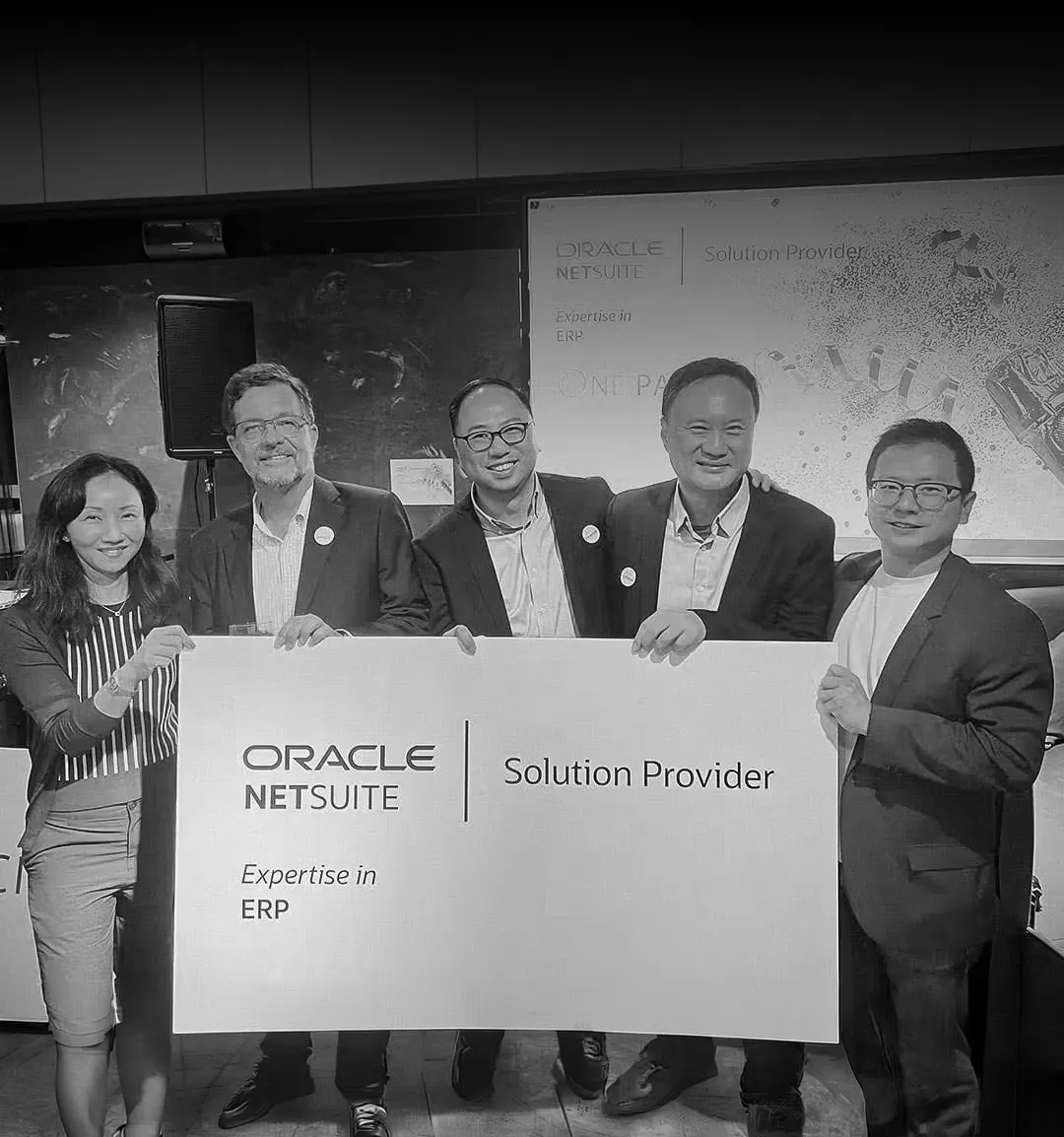
In 2023, PS Global (formerly ONE Pacific) earned the NetSuite Solution Provider – ERP Expertise accreditation, recognizing our excellence in project execution, technical proficiency, and measurable client success with NetSuite Cloud ERP.
PS Global Partner of the Year 2025
ASEAN Solution Provider
Popular Family Offices Integrations

HSBC
Parse HSBC statement files across your APAC entities, generate country-specific payment files for RTGS, BAHTNET, and direct entry, and handle cash pooling sweeps as inter-company entries in NetSuite.

Bank of China (HK)
BOCHK statement files come in MT940, BAI2, and CSV depending on the account and currency. Getting them all into NetSuite cleanly is the real project.

DBS Bank
DBS IDEAL handles payments and statements, but nothing flows into NetSuite automatically. Your finance team is reformatting MT940 files and reconciling multi-currency accounts by hand.

Standard Chartered
Connect Standard Chartered's Straight2Bank to NetSuite so your team stops downloading statements and reformatting payment files by hand every morning.

Salesforce
Sync Salesforce CRM opportunities, quotes, and accounts into NetSuite so deals close in one system and invoices post in the other without manual handoff.

Hang Seng Bank
Import Hang Seng Bank statements into NetSuite with correct parsing for FPS, CHATS, and autopay transactions, plus separate handling for each currency sub-account.
Showing 6 of 10 Family Offices Integrations

Family Office Finance Insights


Family Office
FAQ'sNot exactly. Your existing Xero or QuickBooks data doesn't disappear — the question is how much of it needs to migrate and in what form. For most SFOs, the practical answer is: current-year data migrates cleanly, prior-year comparatives can usually be reconstructed from existing files for audit purposes, and historical data goes into an archive rather than the new system.
The harder question is whether to run the migration at year-end (cleanest) or mid-year (faster). That's one of the things the discovery phase maps out before you commit to anything.
Sage Intacct is a good product for multi-entity accounting. For a straightforward SFO — under 8 entities, primarily USD/HKD, no Mainland complexity, limited compliance exposure — it's worth evaluating. It's cheaper and faster to implement than NetSuite, and the core multi-entity consolidation is solid.
NetSuite wins when the structure is more complex: Mainland subsidiaries with RMB books, 10+ entities, APAC operations beyond HK, or a need for the Oracle brand as a trust signal for principals. The HK implementation ecosystem for NetSuite is substantially deeper than for Intacct — more local consultants who've configured for HKFRS and HK-specific structures. If you're shortlisting both, ask each partner how many HK multi-entity family office or investment holding structures they've actually configured.
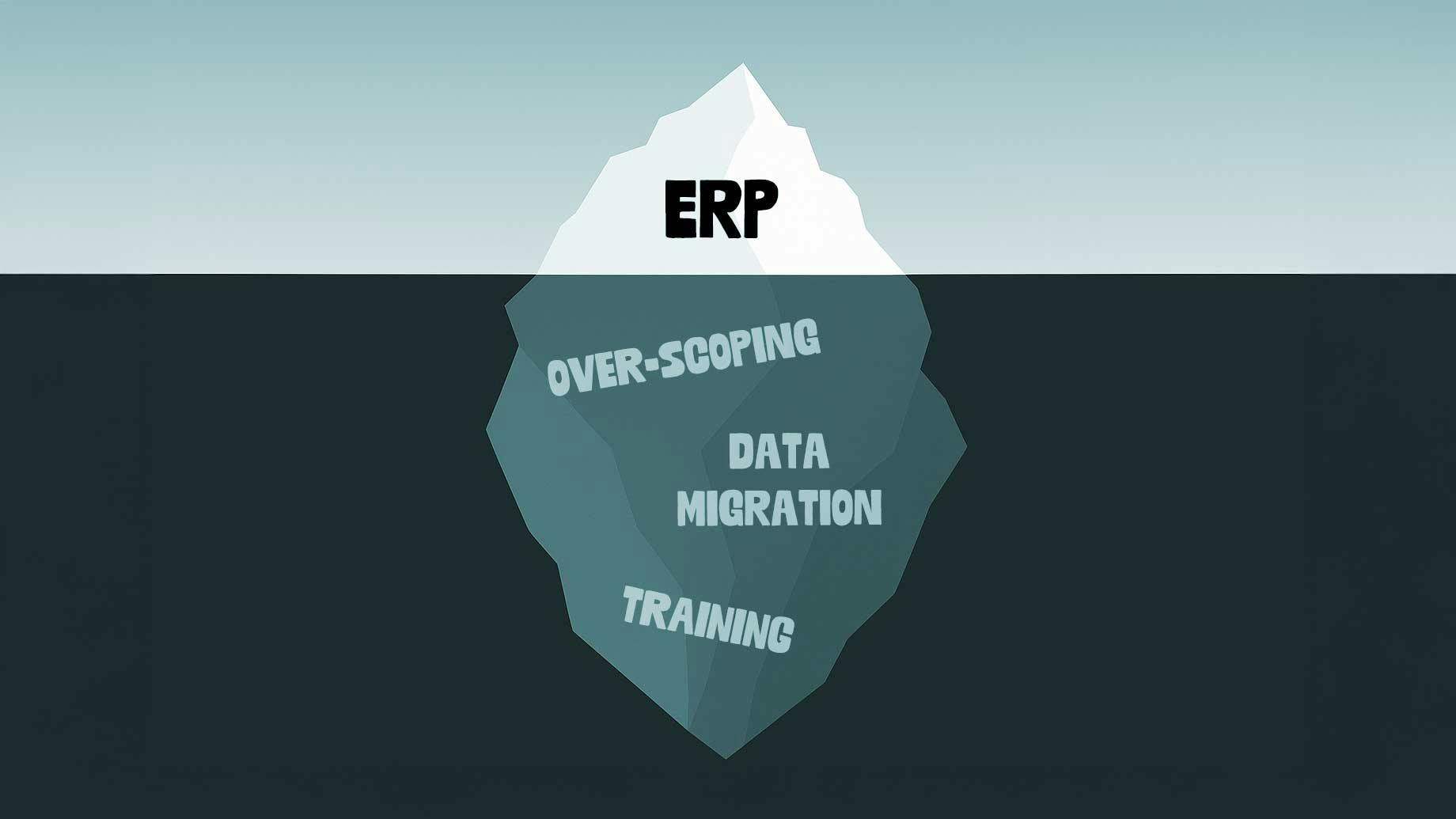
A properly configured NetSuite implementation for a multi-entity SFO structure is a real investment — in licensing and in implementation work — and we won't pretend otherwise. The discovery phase scopes the work and the number before you commit, so there's no open-ended bill.
The way to evaluate the cost is against what the current setup actually costs: the controller's time on intercompany spreadsheets, the exposure if FIHV qualifying transaction records don't hold up at an IRD review, and the risk embedded in a system where any user can edit historical transactions.
The concession requires audit-grade records of every qualifying transaction — the nature, date, amount, counterparty, and that the transaction originated within the FIHV structure. NetSuite's period lock means those records are immutable once closed. The user-level activity log creates a trail that shows what was posted, by whom, and when. The entity hierarchy holds the FIHV as a subsidiary with its own chart of accounts, so transaction classification is structural rather than manual.
When the IRD asks for documentation, or your auditor asks how you support the revenue figures, you have the record to answer. For SFOs below the HK$240M threshold, the AMLO and Companies Ordinance record-keeping requirements still apply and are substantially easier to evidence from a proper accounting system than from Xero or QuickBooks.
AMLO applies to SFOs regardless of whether you hold an SFC license, and it requires documented controls: KYC records, beneficial ownership documentation, and transaction monitoring. NetSuite isn't an AMLO compliance system, but a properly configured implementation supports the record-keeping requirements — immutable transaction logs, access controls, and an audit trail that reflects what happened and who did it.
Your AMLO compliance obligations are met through your policies and procedures, not the software alone. What NetSuite does is give you the records those procedures require, maintained automatically, without manual reconstruction.
It depends almost entirely on entity count and compliance exposure. If you have two or three entities, primarily HKD/USD, no FIHV election planned, and the books are manageable, it may genuinely be too much at this stage. We'll say so.
If you have eight or more entities, a Mainland sub, multi-currency complexity, and either a FIHV election in progress or AMLO obligations that need documented controls, the question is whether the cost of the current setup — in time, risk, and management overhead — is already higher than it appears. That's a calculation worth doing before deciding.
Yes, and it's a common path. NetSuite OneWorld allows you to add subsidiaries to an existing instance. The SFO structure — holding company, FIHVs, SPVs — can sit in the same tenant as the operating entity, with consolidated financials across the whole group.
The caveat is the quality of the existing implementation. If it was built cleanly — sensible chart of accounts, consistent use of segments, proper period management — the extension is relatively straightforward. If it was implemented generically and never configured for multi-entity use, there's remediation work to scope first. We can assess the existing instance as part of the discovery phase.
You don't commit to a full platform on day one. The fixed-scope discovery phase maps your entity structure and identifies where the real implementation complexity sits. You see the plan and the cost before the build begins.
We're also realistic about live operations. The implementation can be phased so new activity starts clean in NetSuite while the existing setup runs legacy periods to their natural close. Nobody is forced to migrate mid-year with open periods and live bookkeeping running in two systems simultaneously.
No. It's your NetSuite account and your data. What we implement is a configuration on a platform you own — not a black box that only we can access.
We hand over documentation and train your team so routine changes don't require us. We'd rather earn the ongoing relationship than hold the keys to the system as leverage.
Engagement teams are kept small and consistent — two or three people throughout, not a rotating roster. Entity names, ownership structures, and transaction data are confined to the named team. We don't reference client names without explicit permission, and scope documents and correspondence are kept within a dedicated engagement workspace.
We work regularly with structures where the entity names themselves are treated as confidential, and we operate accordingly from the start of the engagement.
OnePacific is now part of PS Global Consulting.
hk.psglobalconsulting.com is the dedicated Hong Kong NetSuite practice site for the same award-winning team clients knew as OnePacific, while psglobalconsulting.com covers the broader PS Global Consulting business across the region.
We continue to deliver NetSuite implementation, customization, integration, and support services for clients across Hong Kong and APAC.

Every entity in view. Every record that holds up.
We've configured NetSuite for multi-entity financial structures across APAC for 18 years. Tell us about your setup and we'll give you an honest read on whether it fits.